English
 中文简体
中文简体

 2026-07-17
 Industry News
Content
In the competitive landscape of industrial manufacturing, the quality of a product’s final coating is only as good as the preparation that precedes it. Traditional manual-operated surface pretreatment equipment often suffers from "human factor" inconsistencies, leading to poor adhesion and premature coating failure. The modern Surface Pre-treatment System addresses these challenges by integrating automated multi-process linkage, ensuring every workpiece undergoes an identical, rigorous preparation cycle.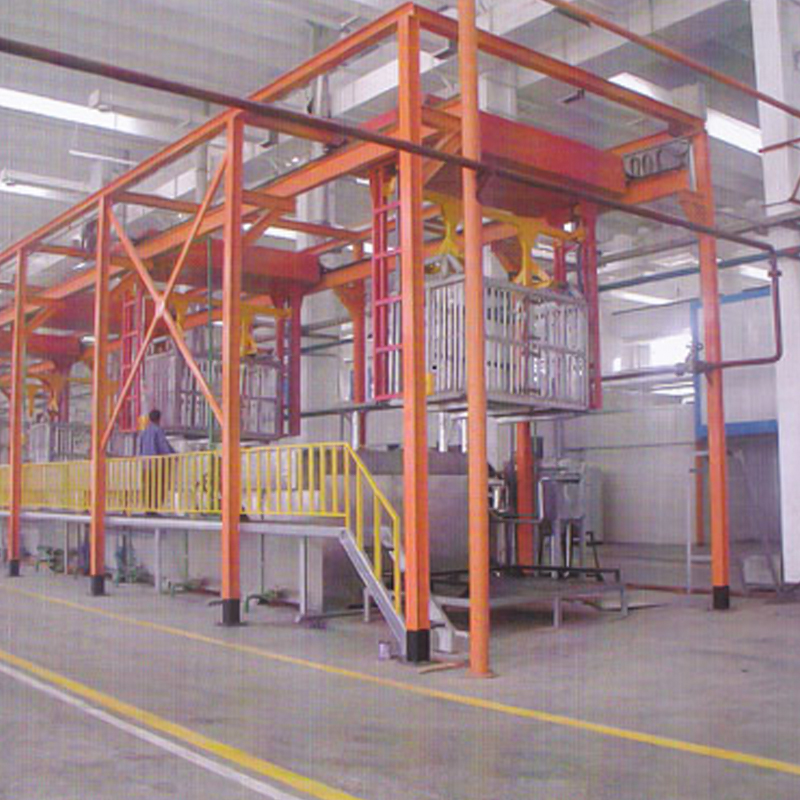
Unlike legacy systems that treat cleaning, activation, and conversion as isolated steps, this advanced system creates a unified control environment. This integration eliminates the risk of cross-contamination and flash rust that occurs when workpieces sit idle between manual stations. By automating the transition from cleaning to film formation, facilities can see a throughput increase of up to 45% compared to manual batch processing.
Water consumption is one of the highest operational costs in pre-treatment. Standard systems often rely on a "flow-through" method where fresh water is constantly consumed and then discarded as hazardous waste. This Surface Pre-treatment System utilizes closed-loop water recycling technology, which filters and reclaims process water for reuse in initial rinse stages.
Implementing a closed-loop system is not just an environmental choice—it is a financial necessity. On average, a high-capacity system can reduce daily water intake by 60% to 80%. Furthermore, by precisely dosing chemical agents through automated sensors, the system prevents "over-concentration" spikes that lead to chemical waste and increased neutralization costs in the wastewater stream.
| Efficiency Factor | Manual Single-Function Equipment | Integrated Automated System |
|---|---|---|
| Water Usage | High (Continuous Flow) | Low (Closed-Loop Recovery) |
| Chemical Waste | High (Manual Dosing) | Minimal (Precision Feedback) |
| Process Monitoring | Subjective / Periodic | Real-Time / Continuous |
A major pain point for manufacturers is the need to process different types of workpieces—from tiny precision components to massive structural frames—using the same equipment. The Surface Pre-treatment System features flexible parameter adjustment, allowing operators to customize dwell times, spray pressures, and chemical concentrations for specific part profiles.
For precision parts, the system uses fine-tuned atomization to ensure that activation agents reach deep into complex crevices without causing surface erosion. For large-sized workpieces, the multi-process linkage ensures that the large surface area is treated uniformly, preventing "dry spots" that typically lead to uneven conversion film formation and subsequent paint peeling.
The "Quality Monitoring" module is the brain of the Surface Pre-treatment System. It continuously tracks pH levels, conductivity, and temperature within the activation tanks. If any parameter drifts outside the pre-set 2% tolerance window, the system automatically adjusts the chemical feed pumps to restore equilibrium.
This level of control is vital for the formation of the conversion film. A stable conversion layer serves two purposes:
As production demands grow, the ability to handle high-volume batch processing becomes the bottleneck. This system is designed for high-density loading, utilizing intelligent spray nozzle arrays that provide 360-degree coverage. By optimizing the "workpiece-to-chemistry" contact time, the system can process more parts per hour while reducing the footprint required for the pre-treatment line.
Furthermore, the digital logs generated by the system’s monitoring software provide a full audit trail for quality assurance. In sectors like automotive or aerospace, this data is invaluable for proving that every batch of workpieces was treated according to international standards, thereby reducing liability and increasing customer trust.
In summary, transitioning to an automated Surface Pre-treatment System is a strategic move that pays for itself through chemical savings, labor reduction, and the virtual elimination of reworked parts. It is the foundation of a high-performance coating facility.
2026-07-17
Industry News
2026-07-10
Industry News
2026-07-03
Industry News
2026-06-26
Industry News
2026-06-19
Industry News
2026-06-12
Industry News
For exclusive deals and latest offers, sign up by entering your email address below