English
 中文简体
中文简体

 2026-07-17
 Industry News
Content
An electrocoating paint filtration system delivers several decisive advantages over unfiltered electrocoating operations: it removes particulate contaminants from the tank solution, maintains the chemical balance of the bath, eliminates surface defects such as particles and pinholes in the cured coating, extends the usable life of the electrocoat bath, reduces paint consumption through contamination control, and protects downstream equipment from abrasive wear. In practical terms, a properly specified filtration system is the difference between a production line that consistently delivers flawless coating quality and one that generates chronic defect rates, unpredictable bath chemistry, and excessive rework costs.
Electrocoating — also known as e-coating or electrodeposition painting — is one of the most technically demanding coating processes in industrial manufacturing. The tank bath must be maintained within precise chemical parameters at all times, and any particulate contamination introduces defects that are nearly impossible to correct after curing. The filtration system is therefore not a peripheral accessory but a core process-critical component of any well-engineered electrocoat line.
Before examining the specific advantages, it is helpful to understand the operating principle. In an electrocoat system, workpieces are submerged in a large tank of water-based paint solution and an electrical current is applied, causing the paint to deposit uniformly onto the surface of the workpiece. The tank solution circulates continuously, and contamination accumulates over time from multiple sources: particles introduced on incoming workpieces, byproducts of the electrochemical deposition process, degradation of paint components, and environmental particulate from the surrounding facility.
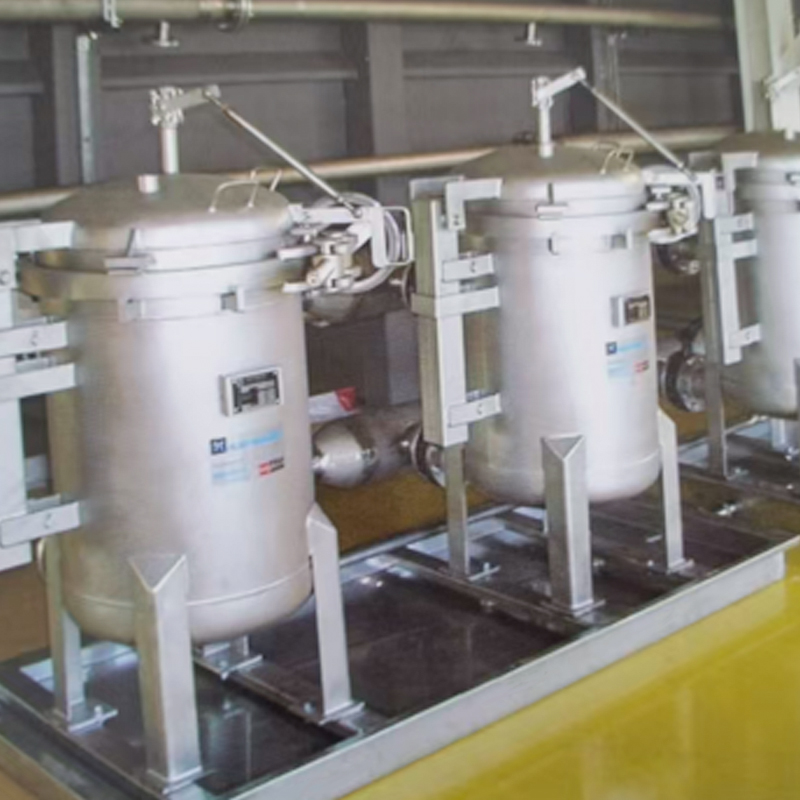
The filtration system draws bath solution from the tank, passes it through filter media — most commonly stainless steel bag filters in a multi-tube parallel arrangement — and returns clean solution to the tank. The multi-tube parallel design is particularly important: it allows high flow rates to be processed continuously without creating pressure drops that would disrupt bath circulation, and it enables individual filter tubes to be serviced or replaced without shutting down the entire system.
Filtration is typically combined with ultrafiltration (UF) membrane systems in more advanced electrocoat lines, where UF membranes remove dissolved ionic contaminants and excess paint solids that particle filters alone cannot address. The combination of mechanical bag filtration and membrane ultrafiltration provides a comprehensive contamination control solution across all particle sizes and contamination types.
The most immediately visible and commercially significant advantage of a well-functioning electrocoating filtration system is the elimination of surface defects in the cured coating. In an unfiltered or poorly filtered electrocoat bath, two categories of defects dominate: particulate inclusions and pinholes.
Particles suspended in the electrocoat bath — whether from incoming workpiece contamination, rust flakes, inorganic scale, or agglomerated paint resin — can become embedded in the deposited coating film during the electrodeposition process. Once the coating cures, these inclusions appear as raised bumps, grit, or rough texture on the coating surface. In cosmetically sensitive applications such as automotive body panels, appliance housings, or precision industrial components, even a single particle inclusion per square meter is typically unacceptable and requires sanding, reworking, or scrapping of the affected part.
Effective filtration removes particles down to the filter medium's rated retention size — stainless steel bag filters for electrocoat applications are typically rated at 25–100 microns for primary filtration, with finer cartridge or membrane stages handling smaller particles. By maintaining a consistently low particle count in the bath, the filtration system prevents particulate inclusions before they can form.
Pinholes are small through-holes or craters in the cured electrocoat film, typically caused by gas evolution during electrodeposition, contamination of the bath with oil or silicone, or disruption of the depositing film by poorly dissolved paint components. A filtration system that maintains bath cleanliness reduces the frequency of pinhole formation by removing the contaminants that initiate them. In corrosion protection applications — where the electrocoat is the primary barrier between the substrate and the environment — pinholes represent direct paths for corrosive agents to reach the substrate, dramatically reducing the coating's protective performance. A pinhole-free electrocoat film can provide salt spray corrosion resistance exceeding 500–1,000 hours in standard testing; pinholes can reduce this to a fraction of that figure.
The chemistry of an electrocoat bath must be maintained within tight parameters for consistent deposition quality. Key parameters including pH, conductivity, solids content, solvent content, and the ratio of resin to pigment must all be controlled to achieve the target film build, cure properties, and appearance. Contamination of the bath — particularly ionic contamination from poorly pretreated workpieces — disrupts these parameters and degrades coating performance.
Workpieces entering the electrocoat bath carry residual ions from pretreatment stages — phosphate, chloride, sulfate, and other species that dissolve into the bath over time. As ionic contamination accumulates, bath conductivity increases beyond the optimal range, causing coating film quality to deteriorate. Ultrafiltration membranes integrated with the filtration system remove dissolved ionic species continuously, maintaining conductivity within the operating window and preventing the bath from becoming progressively depleted of its ability to deposit high-quality film.
Agglomerated paint solids — clumps of resin or pigment particles that have flocculated out of stable suspension — are a significant contamination source that filtration directly addresses. By removing these agglomerates before they can be deposited on workpiece surfaces or settle on tank surfaces and electrodes, the filtration system maintains the homogeneous distribution of solids throughout the bath. This homogeneity is essential for consistent film build and color uniformity across all workpieces processed in the bath.
The electrodeposition process continuously generates byproduct acids or bases at the electrodes, depending on bath type (cathodic or anodic). Without continuous removal of these byproducts, bath pH drifts outside the optimal range, causing film quality to deteriorate and eventually making the bath unusable. The ultrafiltration permeate circuit in a complete filtration system removes low-molecular-weight byproducts that contribute to pH instability, reducing the frequency and quantity of pH correction chemicals required and improving overall bath stability.
An electrocoat bath represents a significant material investment. The cost of the paint resin, pigment, and solvent system in a large production electrocoat tank can represent tens of thousands of dollars in material value. Premature bath dumping due to uncontrolled contamination buildup is a major avoidable cost in electrocoat operations — one that effective filtration directly prevents.
Without adequate filtration, contaminant accumulation forces bath replacement at intervals that may be as short as several months in high-throughput operations. With a properly sized and maintained filtration system, the same bath can be operated continuously for 12 months, 24 months, or longer depending on production volume and bath maintenance practices. Over a production line's operating life, this translates to a substantial reduction in paint material costs and in the labor, downtime, and waste disposal costs associated with bath changeovers.
A particularly valuable function of integrated ultrafiltration in electrocoat filtration systems is the production of ultrafiltrate — a clean, paint-free permeate that can be used as the final rinse water after electrocoating. By rinsing workpieces with ultrafiltrate rather than fresh deionized water, the paint solution dragged out of the tank on workpiece surfaces is recovered back into the bath rather than being lost to drain. This closed-loop paint recovery can reduce paint dragout losses by 90–95%, representing a direct reduction in paint consumption proportional to production volume. For a high-volume automotive or appliance coating line, this recovery can amount to hundreds of kilograms of paint resin recovered per month.
Electrocoating is valued in industrial manufacturing partly because of its ability to apply uniform film thickness on complex geometries, including interior recesses, edges, and weld seams that other coating methods cannot reach consistently. This uniformity is only achievable when the bath chemistry is stable — and bath chemistry stability is directly dependent on filtration effectiveness.
In a well-filtered electrocoat system, the bath parameters that control film build — voltage, bath solids content, bath conductivity — remain within their target ranges consistently across shifts, days, and production campaigns. The result is predictable, reproducible film thickness and appearance on every workpiece processed, regardless of when in the bath's operating cycle that workpiece was coated. Without filtration maintaining this chemical stability, bath parameters drift progressively, causing film thickness and quality to vary between early and late production runs — a common source of customer complaints and internal rework in poorly maintained electrocoat lines.
| Quality Parameter | Without Adequate Filtration | With Proper Filtration System |
|---|---|---|
| Particulate inclusions | Frequent; increases over bath life | Eliminated or minimized |
| Pinhole defects | Common; unpredictable occurrence | Rare to absent |
| Film thickness consistency | Drifts as bath chemistry degrades | Stable and reproducible |
| Bath pH stability | Requires frequent correction | Stable with minimal correction |
| Bath conductivity | Progressive increase; out-of-range | Controlled within target range |
| Corrosion resistance of coated parts | Variable; compromised by pinholes | Consistent; meets specification |
| Required bath change frequency | Months; driven by contamination | Years; driven by production volume |
The economic case for investing in a high-quality electrocoating filtration system is compelling when rework and scrap costs are quantified. In electrocoat operations without effective filtration, defect rates of 5–15% or higher are not uncommon — every defective part must either be sanded and recoated (adding labor and energy cost), stripped and refinished (adding chemical and material cost), or scrapped entirely (adding material and production capacity cost).
A filtration system that reduces the defect rate from 10% to under 1% on a production line processing 1,000 parts per shift directly prevents rework on 90 parts per shift. At even modest rework labor and material costs, the savings generated by defect reduction alone can recover the capital cost of the filtration system within the first year of operation. Beyond the direct cost savings, lower defect rates also improve on-time delivery performance, reduce inspection labor, and minimize the customer complaint exposure that chronic quality problems create.
Maintaining bath chemistry in a contaminated, unfiltered bath requires larger and more frequent additions of pH adjusters, conductivity modifiers, and replenishment paint to compensate for the destabilizing effects of contamination. An effective filtration system reduces the rate of bath chemistry drift, directly lowering the volume of correction chemicals consumed per unit of production. In large-volume electrocoat operations, this reduction in chemical consumption is a meaningful and measurable cost saving that accumulates month after month throughout the system's operating life.
When bath conductivity is properly controlled by the filtration system, the electrodeposition process operates at its designed voltage and current efficiency. A bath with excessive conductivity from accumulated ionic contamination requires higher applied voltage to achieve the same film build, or produces excessive film build at standard voltage — both conditions waste electrical energy and potentially damage coating quality. Maintaining bath parameters in their target ranges through filtration keeps energy consumption at its designed operating point, avoiding the energy penalty associated with out-of-specification bath conditions.
The electrocoat tank contains significant capital investment beyond the bath chemistry itself — electrodes, pumps, agitation systems, heat exchangers, and tank lining materials. Particulate contamination in an unfiltered bath acts as an abrasive throughout the circulation system, accelerating wear on pump impellers, valve seats, and heat exchanger surfaces. Hard particles deposited on electrode surfaces interfere with current distribution, creating non-uniform deposition zones across the bath.
By removing particulate contamination continuously, the filtration system extends the service life of all wetted components in the electrocoat system. Pump maintenance intervals increase, electrode cleaning frequency decreases, and heat exchanger performance is maintained without the progressive fouling that particulate deposits cause. The cumulative reduction in maintenance labor and replacement parts costs over a production line's lifetime is substantial, and avoiding unplanned equipment failures that cause costly production stoppages is an additional reliability benefit that is difficult to quantify but consistently valued by operations managers.
Electrocoating is already recognized as one of the most environmentally favorable industrial painting processes — its high transfer efficiency (typically 95–99% of the paint entering the tank is deposited onto workpieces), water-based chemistry, and low VOC emissions compare very favorably with spray painting alternatives. A well-designed filtration system amplifies these environmental advantages.
As noted previously, the ultrafiltrate produced by the UF membrane stage of the filtration system enables closed-loop rinsing that recovers dragged-out paint back to the tank. This dramatically reduces the volume of paint-contaminated wastewater generated by the coating process and minimizes the load on the wastewater treatment system. In operations where wastewater treatment and disposal represent significant operating costs, the reduction enabled by effective filtration translates directly to lower environmental compliance costs.
Each electrocoat bath dump generates a large volume of paint-contaminated wastewater that must be treated before discharge or disposed of as industrial waste. Extending bath life from months to years through effective filtration proportionally reduces the number of bath dumps — and therefore the volume of contaminated liquid waste — generated over the life of the production line. This reduction benefits both the environmental compliance position of the facility and its operating costs.
By maintaining bath chemistry stability and reducing the quantity of correction chemicals added over time, filtration also reduces the cumulative chemical load discharged from the coating line to the wastewater treatment system. Lower discharge loads simplify treatment, reduce chemical treatment agent consumption, and make it easier to maintain compliance with discharge concentration limits.
The stainless steel bag filter in multi-tube parallel configuration is the industry-standard primary filtration component for electrocoat paint filtration systems, and its design embodies several specific engineering advantages that make it particularly well-suited to the demands of continuous electrocoat operation.
Electrocoat bath solutions are chemically aggressive — they contain paint resins, solvents, pH modifiers, and ionic species that would rapidly corrode carbon steel or aluminum filter housings. Stainless steel (typically 304 or 316 grade) provides excellent chemical resistance across the full range of electrocoat chemistries — both cathodic and anodic systems — without contributing metallic contamination to the bath or requiring frequent housing replacement. The material also withstands the regular cleaning procedures (backflushing, chemical cleaning) applied to filter systems in service without degradation.
The parallel arrangement of multiple filter tubes within the housing provides several operational advantages over a single large filter element:
Filter bag media for electrocoat applications are selected based on the target particle retention size and the chemical compatibility of the media with the specific bath chemistry. Common media options include polypropylene felt (wide chemical compatibility, good for cathodic systems), polyester felt (higher temperature resistance), and nylon mesh (reusable, cleanable). The ability to select the appropriate media for specific electrocoat chemistries and particle size distributions is an advantage of the bag filter format over fixed-media alternatives.
| Filter Stage | Typical Retention Rating | Contaminants Removed | Key Benefit |
|---|---|---|---|
| Primary bag filter | 25–100 microns | Coarse particles, rust flakes, large agglomerates | Protects downstream equipment; removes visible defect sources |
| Secondary cartridge filter | 1–25 microns | Fine particles, pigment agglomerates | Eliminates fine particle inclusions; improves surface smoothness |
| Ultrafiltration (UF) membrane | 0.001–0.1 microns (molecular weight cutoff) | Dissolved ions, low-MW organics, excess paint solids | Controls conductivity and pH; produces rinsing ultrafiltrate |
While all electrocoat operations benefit from effective filtration, certain applications are particularly demanding and derive correspondingly greater value from a high-performance filtration system:
The advantages of an electrocoating paint filtration system are fully realized only when the system is correctly sized, designed, and manufactured for the specific electrocoat bath it serves. The combination of flow rate sizing, filter medium selection, UF membrane specification, and system integration with the overall electrocoat line requires deep technical expertise in both filtration engineering and electrocoat process chemistry.
As a professional China Electrocoating Paint Filtration System Supplier and Custom Electrocoating Paint Filtration System Plant established in 1991, our company has accumulated more than three decades of focused experience in the design, manufacture, and supply of coating equipment. Located in Xiaji Industrial Park, Jiangdu District, Yangzhou City — with convenient transport links and proximity to Yangzhou Taizhou International Airport — the company serves customers across China and internationally with coating production line solutions built on consistent manufacturing quality and deep process knowledge.
With over 30 years dedicated exclusively to coating equipment production, manufacturing, and research, the company has supplied numerous high-quality coating production lines to enterprises across a wide range of industries. This depth of application experience enables filtration systems to be specified and customized precisely for each customer's electrocoat bath chemistry, production volume, workpiece type, and quality requirements — ensuring that every filtration system installed delivers the full spectrum of benefits described in this article throughout its operating life.
An electrocoating paint filtration system is not an optional enhancement — it is the process infrastructure that makes consistently high-quality electrocoating possible. The advantages it delivers across coating quality, bath life, material efficiency, equipment protection, and environmental performance represent a compounding return on investment that accumulates with every shift of production the system supports.
2026-07-17
Industry News
2026-07-10
Industry News
2026-07-03
Industry News
2026-06-26
Industry News
2026-06-19
Industry News
2026-06-12
Industry News
For exclusive deals and latest offers, sign up by entering your email address below