English
 中文简体
中文简体

 2026-07-17
 Industry News
Content
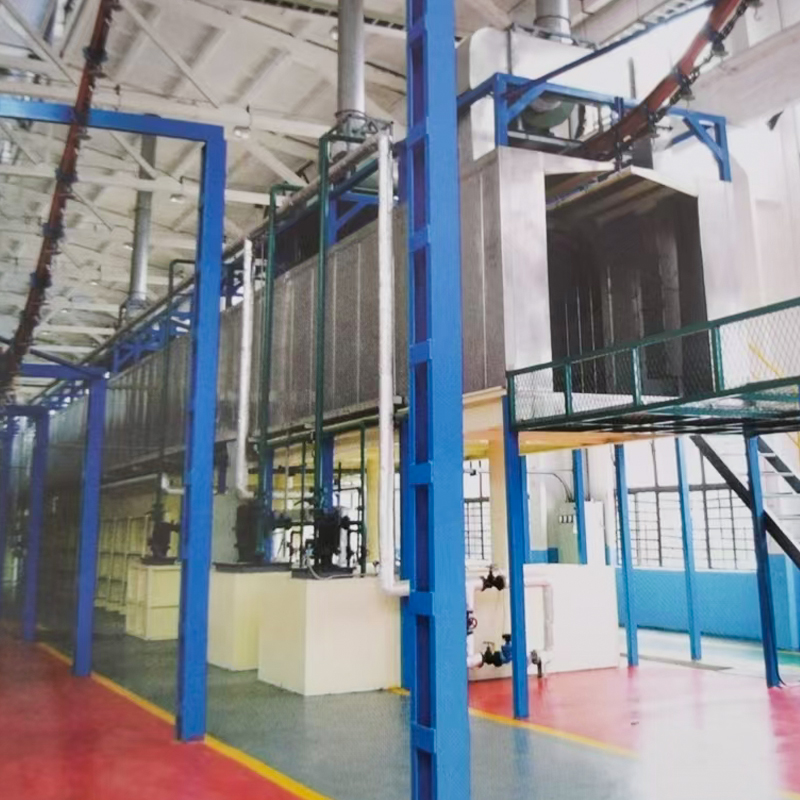
The steps involved in using a dip-spray combined pre-treatment equipment follow a fixed operational logic: workpiece preparation → equipment commissioning → sequential chemical processing through immersion and spray stages → quality verification → safe shutdown. Every stage in this sequence has a defined purpose, measurable acceptance criteria, and direct consequences for the performance of the final coating if executed incorrectly. Understanding the rationale behind each step — not just the mechanical actions required — is what separates operators who consistently produce high-quality pre-treated surfaces from those who manage recurring coating failures.
A standard dip-spray combined pre-treatment line for steel parts processes each workpiece through 8 to 15 individual treatment stages over 20 to 45 minutes of total immersion and transit time. The process is designed as a continuous, interdependent chain: the output quality of each stage is the input condition for the next, and shortcomings in early stages — incomplete degreasing, inadequate rinsing, improper surface conditioning — cannot be corrected by later stages and will ultimately manifest as adhesion failures, osmotic blistering, or corrosion in the final coated product.
Before describing the operational steps, it is important to understand what distinguishes a dip-spray combined system from a pure spray or pure dip tunnel — because this distinction dictates several critical operating decisions that operators must make throughout the process.
In a dip-spray combined system, every process tank simultaneously delivers two types of treatment action:
The implication for operation is that both mechanisms must be functioning correctly at all times — a failed recirculation pump or blocked spray manifold in an immersion tank reduces the system to a pure dip process, losing the critical boundary layer renewal that the jet action provides. Operators must verify spray and jet function at the start of each shift and during production as part of the normal operating routine.
The operational sequence begins before the first workpiece enters the line. Equipment readiness verification is a mandatory pre-production phase that should never be abbreviated to save time — the consequence of starting production with an out-of-specification bath or a malfunctioning spray system is a batch of inadequately pre-treated parts that may not be identifiable as defective until coating failures appear in service.
Walk the full line length before startup and verify the following:
Start the heating systems first and allow adequate warm-up time before performing bath analysis or loading parts. Cold baths produce misleading analysis results because the chemical equilibria that determine free acid, total acid, and pH readings are all temperature-dependent. More importantly, degreasing at temperatures below 45°C is significantly less effective — the saponification rate of oils approximately doubles for every 10°C rise in temperature, so a degreasing bath at 40°C takes roughly four times as long to achieve the same cleaning result as one at 60°C. Allow a minimum of 60 to 90 minutes for cold start, or 20 to 30 minutes if the plant has been at temperature recently and baths are still warm.
Once all baths have reached operating temperature, collect samples and perform the specified chemical analysis for each process stage. The following table summarizes the critical parameters for each stage and the action required when outside specification:
| Process Stage | Parameter to Measure | Typical Specification | Corrective Action if Out of Spec |
|---|---|---|---|
| Pre-degreasing | Free alkalinity, pH, tramp oil level | FA 8–12 pts; pH 10.5–12.0 | Add concentrate if low; skim or filter if oil-saturated |
| Main degreasing | Free alkalinity, pH, tramp oil level | FA 10–18 pts; pH 11.0–13.0 | Add concentrate; increase skimmer operation |
| Rinse stages | Conductivity, pH | Conductivity per-stage limits; pH 6–8 | Increase overflow rate; partial or full tank replacement |
| Surface conditioning | pH, visual turbidity of colloidal suspension | pH 8.0–9.5; milky-white appearance | Refresh with conditioning product; replace if clear (depleted) |
| Zinc phosphating | Free acid, total acid, accelerator, temperature, zinc content | FA 0.8–1.5 pts; TA 18–28 pts; accel. 1–4 pts | Auto-dose per analysis results before starting production |
| Passivation | Concentration, pH | Per product data sheet | Top up with concentrate to within specification |
| Final DI rinse | Conductivity | Below 20 µS/cm | Regenerate or replace DI water supply |
Do not begin loading workpieces until all parameters are within specification and all temperatures have stabilized. Sign and date the pre-production checklist as a formal record — this documentation is the first line of evidence in any subsequent investigation of coating quality issues.
The dip-spray combined pre-treatment line is a chemical surface conditioning system — it is not a mechanical cleaning or defect-correction system. Parts must arrive at the pre-treatment line in a condition where chemical treatment can succeed; mechanical defects, incompatible materials, and gross contamination beyond the capacity of the degreasing chemistry must be addressed before loading.
Each workpiece or assembly should be checked against the following before loading onto the conveyor carrier:
In a dip-spray combined system, the angle at which the workpiece enters and exits each tank determines whether enclosed cavities fill with process solution and subsequently drain completely. This is the single most important loading variable for parts with complex geometry, and it receives insufficient attention in many operations.
The entry angle should allow the leading face of any cavity opening to be the lowest point as the workpiece descends into the solution — this allows liquid to enter the cavity while air escapes upward through the same opening or through dedicated vent holes. If a cavity opening faces upward during entry, air is trapped inside as the part descends and cannot escape — the cavity remains filled with air even as the surrounding metal is submerged, and the interior surface receives no chemical treatment whatsoever.
The exit angle should allow the cavity opening to be at the lowest point as the workpiece rises from the solution — ensuring that solution drains out under gravity rather than being retained inside, where it would carry process chemistry from one tank into the next as cross-contamination. Pendulum conveyor systems that continuously vary the part angle during transit through the tank provide the most effective solution exchange in complex cavities, but even fixed-angle conveyors must be set to optimize drainage for the specific part geometry in production.
With the equipment verified ready and workpieces correctly prepared and loaded, production begins with the cleaning sequence. The degreasing stages are the foundation of the entire pre-treatment process — everything that follows depends on having a clean, oil-free metal surface to work with.
The pre-degreasing tank is the first active process contact. Its role is to remove the heaviest contamination — bulk stamping oil, drawing compound, wax, and loose metallic debris — before the workpiece enters the main degreasing bath. The pre-degreasing stage deliberately sacrifices itself to protect the main degreasing bath, concentrating the contamination load in a bath that is less critical to final quality and more frequently replaced. Operating at 50°C to 60°C with a dwell time of 3 to 5 minutes, the combined immersion and jet action in this stage should visibly emulsify and disperse oil from the part surface within the first 60 to 90 seconds of immersion.
Monitor the pre-degreasing bath surface during production. An accumulating oil slick is normal — this is contamination being removed from the workpieces. However, if the oil layer becomes thick enough to coat exiting workpieces with oil rather than removing it, the bath has reached saturation and must be partially or fully replaced immediately. Many operations fit an overflow oil skimmer weir to continuously remove floating oil from the pre-degreasing bath surface, extending bath life significantly.
The main degreasing tank must achieve complete removal of all remaining oil, lubricant, and particulate contamination. Operating at 55°C to 65°C with a dwell time of 4 to 8 minutes, the higher alkalinity and temperature of this bath combined with vigorous jet agitation provide the chemical energy and mechanical force needed to clean even recessed internal surfaces completely.
The key quality indicator for the main degreasing stage is the water break test, performed on the first production part each shift and at minimum every 2 hours during production. Pull a representative test panel or the first production part from the rinse stage following degreasing, and pour clean water across the surface. A fully degreased metal surface allows water to sheet continuously in an unbroken film; any oil contamination remaining on the surface causes water to bead or pull away from the contaminated area (the "water break"). A water break result means the degreasing process has failed that part — investigate and correct the bath parameters, temperature, or dwell time before continuing production.
Rinse stages are often treated as passive, self-managing parts of the pre-treatment line — this is a costly misconception. Rinse stage management is active, continuous work that requires regular conductivity monitoring, overflow rate adjustment, and periodic full replacement to prevent process chemical carry-over between incompatible stages.
The conductivity of each rinse stage is a direct measure of the concentration of process chemicals dissolved in the rinse water from drag-out of the previous stage. As production proceeds, drag-out from incoming parts raises conductivity — the overflow rate must be high enough to continuously dilute this contamination and maintain conductivity within acceptable limits.
Target conductivity levels for each rinse position in the pre-treatment sequence are:
In counterflow cascade rinse systems — where water flows from the cleanest final rinse stage backward toward the dirtiest first rinse stage — the same water quality is achievable with 60 to 80% less water consumption than single-stage rinsing at equivalent overflow rates. Operating the cascade correctly requires that the overflow valve settings are matched to production throughput — higher production speed increases drag-out volume and requires proportionally higher overflow rates to maintain conductivity targets.
The phosphating stage is the chemically most complex and quality-critical operation in the entire pre-treatment sequence. The performance of every subsequent coating layer — electrocoat, primer, topcoat — is directly determined by the quality of the phosphate conversion coating formed in this tank. The operator's role during the phosphating stage is primarily to maintain the chemistry within the narrow specification window that produces fine, uniform, adherent phosphate crystals across every surface of every part processed.
The phosphating bath chemistry changes continuously during production as the coating reaction consumes zinc, phosphate, and accelerator components, and as iron dissolved from the steel workpieces accumulates in the bath. The automated dosing system handles continuous fine adjustment, but the operator must perform manual titrations every 1 to 2 hours during production to verify that the auto-dosing system is maintaining the bath within specification and to detect any abnormal consumption trends that indicate a process upset.
The free acid level is the most time-sensitive parameter to monitor. Free acid controls the rate of the acid-dissolution reaction at the metal surface that initiates phosphate crystal nucleation. If free acid falls below specification (typically below 0.8 points), the coating reaction slows, bare areas appear on the workpiece, and coating weight falls below the minimum requirement of 1.5 g/m². If free acid rises above specification (above 1.5 points), crystal growth is suppressed, producing a coarse, poorly adherent coating with high susceptibility to osmotic blistering under the paint film.
The phosphating reaction generates iron phosphate sludge as a byproduct — a fine, grey precipitate that settles to the tank floor if not continuously removed. Sludge accumulation in the phosphating tank causes several problems: it reduces effective tank volume, clogs recirculation pump strainers (reducing jet pressure), and if disturbed by excessive agitation, redeposits on workpiece surfaces as loose, powdery contamination that prevents paint adhesion. Operate the sludge removal system (continuous filtration or batch decanting) throughout the production shift, and remove settled sludge from the tank base at minimum at shift end using the installed scraper or suction system.
A correctly processed zinc phosphate coating on clean steel has a distinctive uniform medium-grey appearance with a fine, slightly matte texture when viewed in good lighting. The trained operator can assess phosphate quality visually on each part as it exits the post-phosphate rinse:
Any visual anomaly observed on a production part should be investigated immediately. Do not continue processing further parts with the same defect until the root cause has been identified and corrected.
The final process stages — passivation and deionized water rinsing — prepare the phosphated surface for its transition from the wet chemical treatment environment to the coating application environment. These stages are brief in duration but critical in their contribution to the long-term performance of the final coating system.
The passivation stage applies a thin sealing film to the microporous phosphate crystal structure. Correctly operated passivation reduces the rate of sub-film osmotic blistering — one of the most common and costly coating failure modes in humid or salt-contaminated service environments — by reducing the water absorption and lateral moisture transport capacity of the phosphate layer.
The passivation bath requires minimal operator intervention during production beyond periodic concentration verification (every 2 to 4 hours) and pH monitoring. The most important operating discipline for the passivation stage is what comes after it — the passivation deposit must not be rinsed with water before drying. The passivation product is designed to remain on the surface and dry in place; post-water rinsing washes it off before it has formed a coherent film, eliminating its protective function entirely. Parts must proceed directly from passivation to the DI rinse stage (where only residual water is removed, not the passivation deposit itself) or to the final drying oven.
The final deionized water rinse removes soluble ionic contamination from the treated surface — the primary cause of osmotic blistering failures in service. The effectiveness of this stage depends entirely on the quality of the DI water supply and the conductivity of the rinse bath during use.
Monitor the DI rinse bath conductivity in real time using the inline sensor and respond immediately if conductivity rises above 20 µS/cm. The most common causes of rising DI rinse conductivity during production are: insufficient fresh DI water supply flow rate, RO or ion exchange system needing regeneration, excessive drag-in from an upstream rinse stage with rising conductivity, or an accidental chemical spill into the DI system. Address the root cause — do not simply increase the DI water flow rate without identifying why conductivity is rising.
The moment the workpiece exits the final DI rinse, the clock is running on pre-treatment effectiveness. The pre-treated surface is in its optimal condition for coating immediately after exiting the DI rinse — any delay exposes the cleaned, conditioned surface to airborne contamination, humidity, and the risk of surface re-oxidation that progressively degrades adhesion. In continuous production lines, parts proceed directly from the DI rinse to electrocoat or to the drying oven before powder coating without any manual handling or extended holding time. When production interruptions create a backlog of pre-treated but uncoated parts, they should be stored in a clean, dry enclosure and coated within 4 hours — do not allow pre-treated parts to remain exposed to plant air overnight.
Quality in pre-treatment cannot be inspected into a finished coated product — it must be built in continuously during production through systematic process monitoring. The following are the minimum quality monitoring activities that must be performed during every production shift, regardless of shift length or production volume:
| Activity | Minimum Frequency | Acceptance Criterion | Response to Failure |
|---|---|---|---|
| Water break test | Every 2 hours; after any bath adjustment | Continuous water film, no break | Stop production; investigate degreasing bath; quarantine parts from last test period |
| Phosphating bath FA titration | Every 1–2 hours | 0.8–1.5 points | Adjust with phosphoric acid (raise) or sodium hydroxide (lower); recheck before continuing |
| All rinse stage conductivity readings | Every 30–60 min (manually) or continuous | Per-stage limits as specified | Increase overflow rate; identify and address contamination source |
| Visual phosphate quality inspection | Every part, by operator | Uniform grey; no bare areas or white powdery deposits | Segregate defective part; investigate bath parameters; check for degreasing failure |
| All heated bath temperatures | Continuous (inline sensor and control panel) | Setpoint ±2°C | Investigate heater or temperature controller fault; do not process until temperature is stable |
| Phosphate coating weight (test panel) | Every 4 hours minimum | 1.5–3.5 g/m² (automotive); per spec for other applications | Adjust phosphating bath chemistry; investigate degreasing and conditioning stages |
| Final DI rinse conductivity | Continuous (inline sensor) | Below 20 µS/cm | Increase DI water flow; check RO/IX system status; do not coat parts until within spec |
Despite careful pre-production preparation and in-process monitoring, process upsets occur in every pre-treatment operation. The speed and quality of the operator's response to an upset determines whether it becomes a minor production interruption or a large batch of defective coated parts requiring rework or scrap. The decision rule is straightforward: when in doubt, stop and investigate before coating further parts.
The most common process upsets encountered during production and the appropriate immediate responses are:
Correct shutdown at the end of each production run protects both the chemical baths and the mechanical equipment during the idle period, and ensures that the line is ready for rapid restart at the beginning of the next production session.
Consistent, disciplined execution of every step from pre-production startup through production monitoring to shutdown documentation is what transforms a dip-spray combined pre-treatment system from a piece of capital equipment into a reliable, high-performance foundation for coating quality. The chemistry and the equipment provide the capability; the operating discipline of the team determines how consistently that capability is realized in every part that passes through the line.
2026-07-17
Industry News
2026-07-10
Industry News
2026-07-03
Industry News
2026-06-26
Industry News
2026-06-19
Industry News
2026-06-12
Industry News
For exclusive deals and latest offers, sign up by entering your email address below