English
 中文简体
中文简体

 2026-07-17
 Industry News
Content
A curing oven system is an industrial thermal processing device designed to apply controlled heat to materials — typically epoxy resins, polymer coatings, composite structures, adhesives, and rubber compounds — to initiate and complete a chemical cross-linking reaction (curing) that transforms them from a workable or liquid state into a hardened, structurally stable final form. What distinguishes a curing oven system from general-purpose heating equipment is its ability to maintain uniform temperature distribution throughout the chamber (typically within ±1°C to ±5°C), follow programmable temperature profiles with precision, and reproduce the same thermal conditions reliably across every production batch.
The "system" designation reflects that it is not merely a heated enclosure but an integrated assembly of heating elements, airflow management, temperature sensing and control, safety interlocks, and data recording — all working together to ensure process integrity.
Forced air circulation using recirculating fans distributes heated air uniformly throughout the oven chamber, eliminating the hot and cold zones that form in natural convection ovens. High-velocity recirculation ensures that all surfaces of the loaded part — regardless of geometry — experience the same thermal conditions simultaneously, which is essential for achieving uniform cure in thick or complex-shaped components.
A PLC or dedicated temperature controller executes programmed cure cycles that specify: ramp rate (how quickly temperature rises), soak temperature (the target curing temperature), soak duration, and cool-down rate. For an aerospace-grade epoxy, a typical cure profile might specify: ramp at 2°C/min to 120°C → hold for 90 minutes → ramp at 2°C/min to 180°C → hold for 60 minutes → controlled cool-down at 3°C/min. The system follows this profile automatically, logging actual temperatures throughout for quality records.
Modern curing oven systems use modular panel construction that allows oven dimensions to be configured for specific part sizes and production volumes — from bench-top laboratory ovens of 50 liters to walk-in industrial chambers exceeding 50 cubic meters. Modular design also simplifies on-site installation, future capacity expansion, and replacement of individual components without full system downtime.
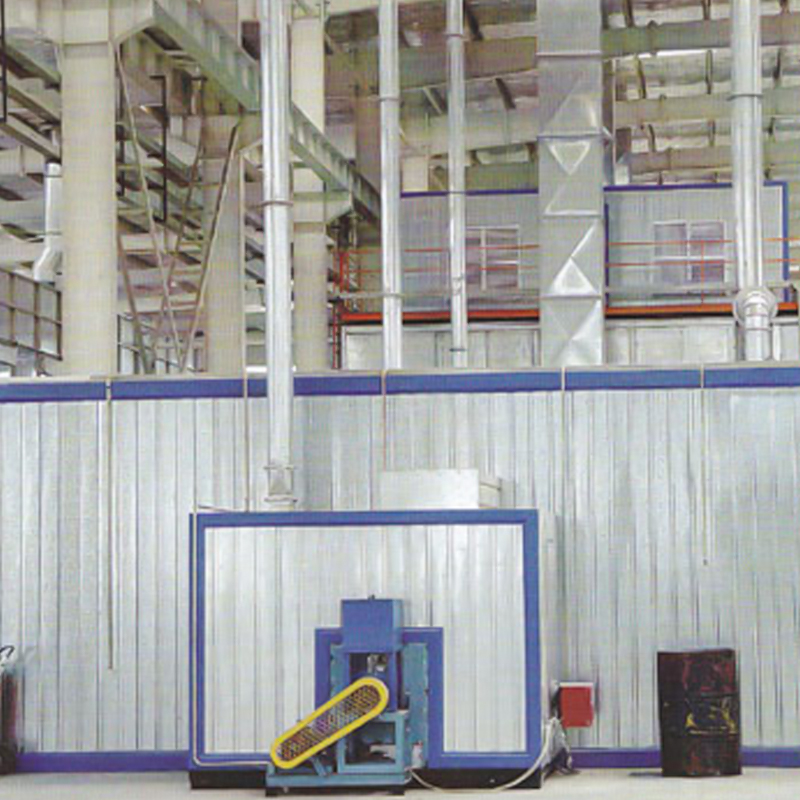
Temperature uniformity within the curing chamber is the single most important performance specification because curing reactions are highly temperature-sensitive. The degree of cure at any point in the part is a direct function of the temperature and time it experienced:
| Industry | Material Cured | Typical Temperature Range |
|---|---|---|
| Aerospace | Carbon fiber / epoxy prepreg composites | 120°C – 180°C |
| Automotive | Powder coatings, adhesive bonds, rubber seals | 150°C – 220°C |
| Electronics | Conformal coatings, PCB underfill, potting compounds | 60°C – 150°C |
| Wind energy | Epoxy infused blade structures | 60°C – 100°C |
| Medical devices | Silicone components, epoxy encapsulants | 80°C – 200°C |
2026-07-17
Industry News
2026-07-10
Industry News
2026-07-03
Industry News
2026-06-26
Industry News
2026-06-19
Industry News
2026-06-12
Industry News
For exclusive deals and latest offers, sign up by entering your email address below