English
 中文简体
中文简体

 2026-07-17
 Industry News
Content
Industrial spray coating equipment is primarily used for applying protective and decorative finishes across automotive, aerospace, electronics, furniture, and industrial manufacturing sectors. Advanced systems achieve 85% coating transfer efficiency—20% higher than conventional open-type spraying tools—while maintaining film thickness deviation within ±1.5μm for uniform coverage on complex workpiece surfaces .
The automotive industry represents one of the largest application sectors for industrial spray coating equipment. Electrostatic spray guns are extensively used for painting vehicle bodies, providing high-quality finishes while reducing material waste and increasing manufacturing efficiency .These systems apply coatings to cylinder walls, pistons, valves, and engine components to improve wear resistance and reduce friction by approximately 22%, supporting fuel efficiency goals .
With the global electric vehicle market expanding from USD 786 billion in 2024 to USD 3,877 billion by 2032, demand for advanced coating applications on battery components and electric motors continues to surge .Industrial spray coating equipment applies specialized thermal spray coatings to protect sensitive electronic components while ensuring optimal heat dissipation and electrical insulation properties.
Automotive exhaust systems and suspension components exposed to harsh environmental conditions rely on industrial spray coating for corrosion protection and longevity .The technology ensures complete coverage with minimal waste, which is critical for cost efficiency in high-volume production environments .
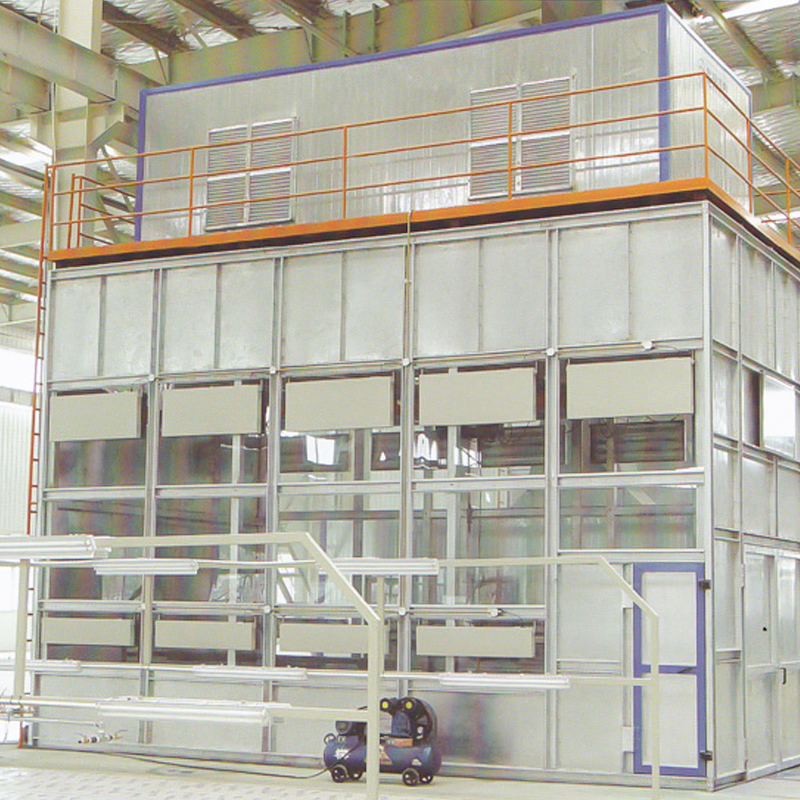
The aerospace sector dominates the thermal spray coating market with approximately 35% market share, utilizing industrial spray equipment to protect turbine blades and engine components from extreme temperatures exceeding 1,500°C .Ceramic thermal barrier coatings (TBCs) applied via plasma spray systems enhance fuel efficiency and extend component life by approximately 40% .
Industrial spray coating equipment applies protective layers to aircraft landing gears, bearings, fuel nozzles, combustion liners, and drive shafts .These coatings protect aerospace metal parts from heat, abrasion, and corrosion while supporting the industry's goals to lighten aircraft and increase fuel efficiency. With global air traffic growing at 4.3% CAGR until 2030, demand for high-performance aerospace coatings continues to expand .
Next-generation HVOF systems with optimized Laval nozzles increase particle velocities from 600 m/s to over 700 m/s, boosting deposit density by 15% for critical aerospace applications . These advanced systems apply high nickel and refractory alloys to rocket propulsion components, meeting requirements for harsh operating environments.
Gas turbine blades and combustion chamber components utilize thermal barrier coatings applied by industrial spray equipment to withstand high temperatures generated during power generation .These coatings enhance turbine efficiency and protect against thermal fatigue and corrosion, reducing maintenance downtime and extending service intervals.
In the petroleum industry, industrial spray coating equipment applies metallic or ceramic coatings to protect vessels, pipes, turbines, and valves from wear and corrosion .Specialized coatings provide corrosion resistance to pipelines, valves, and pumps, extending their service life in demanding extraction and refining environments .
Metal manufacturing facilities use industrial spray coating to provide robust coatings that protect metal surfaces from corrosion in harsh environmental conditions .The high transfer efficiency of electrostatic spray systems ensures coatings are applied evenly with minimal waste, making them essential for large-scale industrial operations.
The furniture industry employs industrial spray coating equipment to apply finishes to both wooden and metal components. The technology ensures smooth, durable finishes that enhance aesthetic appeal and longevity while reducing production costs by minimizing material waste and rework requirements .
Industrial spray coating provides uniform coats for electronics and appliances, ensuring hard-to-reach areas are covered effectively .The electrostatic spray process is particularly valuable for applying protective coatings to sensitive electronic components where precision and consistency are critical.
The following table summarizes key application sectors and equipment types:
| Industry Sector | Primary Applications | Key Benefits |
|---|---|---|
| Automotive | Body painting, engine components, EV batteries | 85% transfer efficiency, reduced waste |
| Aerospace | Turbine blades, landing gear, engine parts | ±1.5μm precision, thermal protection |
| Energy/Power | Gas turbines, pipelines, wind turbines | Corrosion resistance, extended life |
| Furniture | Wood and metal finishing | Smooth finish, reduced rework |
| Electronics | Component protection, insulation | Precision coverage, uniform coating |
Modern industrial spray coating equipment features wear-resistant ceramic nozzles that precisely adjust atomized particle sizes between 5-20μm via intelligent control panels. This precision adaptation to different workpiece surface textures prevents defects such as drips, runs, and pinholes, ensuring superior finish quality .
Engineered with closed-loop pressure regulation systems and precision atomizing nozzle assemblies, advanced equipment resolves common pain points of conventional coating devices including high waste rates, inconsistent film thickness, and limited adaptability to low-VOC and water-based coating materials .
The device's intelligent thickness calibration function maintains film deviation within ±1.5μm, ensuring uniform coverage across complex workpiece surfaces. This level of precision is essential for aerospace components, automotive finishes, and electronics where coating consistency directly impacts product performance and longevity .
Advanced industrial spray coating equipment incorporates built-in paint recycling modules that recover unattached paint particles for secondary filtration and reuse. Closed-loop recovery systems can reduce feedstock waste by approximately 30%, significantly lowering raw material consumption and production costs .
Equipment features exhaust gas adsorption components that comply with EU REACH and US EPA environmental certification standards. By minimizing overspray and ensuring more paint adheres to target surfaces, electrostatic spray systems substantially lower volatile organic compound (VOC) emissions, supporting environmental sustainability initiatives .
Optimized spray patterns and advanced process controls cut energy consumption per part by approximately 25% .About 82% of major suppliers have achieved ISO 14001 certification, emphasizing green manufacturing practices throughout the coating equipment industry .
Core components including pressure regulating valves, nozzle assemblies, and control systems support quick disassembly and replacement. Basic maintenance can be completed without specialized tools, reducing downtime and maintenance costs .
The global coating equipment market is projected to grow from USD 19.11 billion in 2024 to USD 30.05 billion by 2035, exhibiting a CAGR of 4.2% .The thermal spray coating equipment segment specifically is expected to reach USD 776.71 million by 2034, growing at 4.5% CAGR from 2024's USD 500.15 million base .This growth reflects increasing demand from aerospace, automotive, and energy sectors for advanced coating solutions.
2026-07-17
Industry News
2026-07-10
Industry News
2026-07-03
Industry News
2026-06-26
Industry News
2026-06-19
Industry News
2026-06-12
Industry News
For exclusive deals and latest offers, sign up by entering your email address below