English
 中文简体
中文简体

 2026-07-17
 Industry News
Content
A fluorocarbon coating system is a high-performance surface protection solution built on fluoropolymer resin as its core material. After curing, it forms a dense, flexible protective film that resists UV radiation, moisture, chemical exposure, and temperature extremes far beyond what conventional polyester or polyurethane coatings can achieve. In practical terms, this means structures and equipment coated with a fluorocarbon system can remain visually and structurally intact for 15 to 25 years under outdoor exposure—compared to the 5 to 10 years typical of standard industrial coatings.
Understanding what a fluorocarbon coating system is requires looking at its chemistry, formulation, performance benchmarks, and the range of applications where it delivers measurable advantages over conventional alternatives.
The defining feature of any fluorocarbon coating system is the carbon-fluorine (C-F) bond at the molecular level. This bond is one of the strongest in organic chemistry, with a bond dissociation energy of approximately 544 kJ/mol—significantly higher than the carbon-hydrogen bond (~413 kJ/mol) found in conventional resins. This exceptional bond strength is the source of fluorocarbon's resistance to UV degradation, oxidation, and chemical attack.
The primary resin types used in fluorocarbon coating systems include:
The fluorine atoms in the polymer backbone are electronegative and tightly shield the carbon chain, making the cured film highly non-reactive. This means aggressive agents—acids, alkalis, salt spray, industrial pollutants—cannot easily penetrate or degrade the film surface.
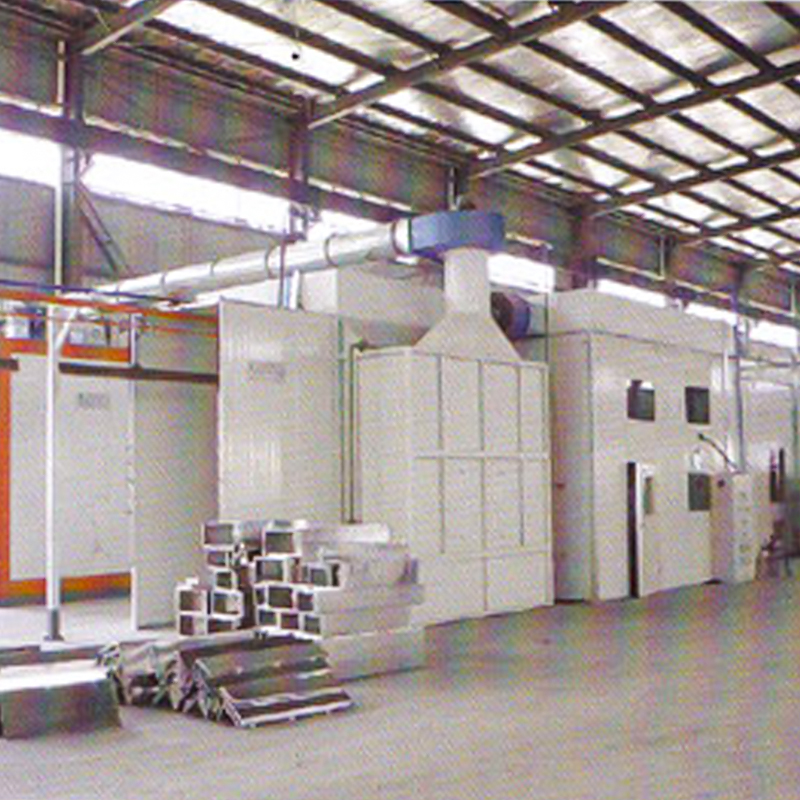
A fluorocarbon coating system is not a single product but a multi-component formulation engineered to work as a complete system. The main components are:
The base resin—typically FEVE or PVDF—determines the coating's fundamental weathering resistance and gloss retention. Higher fluorine content (by weight percentage) generally correlates with superior durability. Premium formulations target a fluorine content of 30% or above by resin weight to achieve Class 1 weathering performance under AAMA 2605 standards.
Isocyanate or melamine-based curing agents cross-link with the fluoropolymer resin to form a dense three-dimensional network. The degree of cross-linking directly affects hardness, chemical resistance, and adhesion. Two-component (2K) fluorocarbon systems use isocyanate curing agents and require on-site mixing, while thermally cured systems are processed in factory environments at elevated temperatures.
These include UV absorbers, light stabilizers (HALS), anti-settling agents, and leveling agents. UV absorbers intercept harmful solar radiation before it reaches the polymer backbone; HALS (Hindered Amine Light Stabilizers) neutralize free radicals generated by any UV that does penetrate. Together, these additives extend service life beyond what the fluoropolymer alone could achieve.
Inorganic pigments (iron oxides, titanium dioxide, mixed metal oxides) are selected for UV stability. Organic pigments, if used, must be verified for lightfastness, as poorly chosen pigments are a common cause of premature color fading even in otherwise well-formulated coatings.
The table below summarizes key performance metrics across the three major coating types used in industrial and architectural applications:
| Performance Metric | Polyester Coating | Polyurethane Coating | Fluorocarbon Coating |
|---|---|---|---|
| Expected service life (outdoor) | 5–8 years | 8–12 years | 15–25 years |
| Gloss retention (5 years, Florida exposure) | 40–60% | 60–75% | 85–95% |
| Color change (ΔE after 2000h UV) | ΔE > 5 | ΔE 3–5 | ΔE < 1 |
| Salt spray resistance (ASTM B117) | 500–1000 h | 1000–2000 h | 3000–5000 h |
| Chemical resistance | Moderate | Good | Excellent |
| Self-cleaning ability | Low | Low–Moderate | High (low surface energy) |
A color change of ΔE < 1 is imperceptible to the naked eye—a standard that fluorocarbon systems consistently meet under accelerated weathering, while polyester coatings frequently exceed ΔE 5 (visible and objectionable change) within the same test period.
Correct application is as critical as the formulation itself. A fluorocarbon coating system is typically applied as a layered structure, each layer serving a distinct function:
Application methods include airless spray, conventional air spray, and electrostatic spray (for factory-coated components). For two-component (2K) field-applied systems, pot life after mixing is typically 4 to 8 hours at 20°C; exceeding pot life results in inadequate cross-linking and reduced performance.
Factory-applied PVDF systems require baking at 220–250°C for full film formation and are therefore limited to pre-fabricated components (aluminum composite panels, coil-coated sheet metal, extruded profiles).
Fluorocarbon coating systems are deployed wherever long service life under UV and environmental stress is the primary design requirement:
Aluminum curtain wall systems, window frames, cladding panels, and roofing components are among the highest-volume applications. High-rise buildings in coastal or tropical climates benefit most from the combination of UV stability and corrosion resistance. AAMA 2605—the most demanding architectural coating specification in North America—mandates fluorocarbon coatings for Class 1 performance, including a minimum of 2000 hours of salt spray resistance and chalk rating of no more than 8 after 10 years of Florida exposure.
Bridges, industrial storage tanks, offshore platforms, and transmission towers in coastal or chemically aggressive environments use field-applied FEVE-based fluorocarbon topcoats over corrosion-resistant primer systems. The reduced recoating frequency—once every 15 to 20 years versus every 5 to 7 years for standard systems—delivers significant lifecycle cost savings on large structures where recoating requires scaffolding, surface preparation, and traffic management.
Railway rolling stock, ships, and airport ground support equipment operate in environments combining high UV exposure, salt spray, fuel splash, and mechanical abrasion. Fluorocarbon topcoats maintain appearance and corrosion protection through operating cycles that would cause visible degradation in polyurethane finishes within three to five years.
Chemical processing equipment, heat exchangers, and outdoor electrical enclosures benefit from fluorocarbon coatings' resistance to acidic and alkaline cleaning agents. The low surface energy of the cured film—typically 15–20 mN/m—also resists adhesion of biological growth, scaling, and particulate fouling.
Performance claims for fluorocarbon coating systems are verified against internationally recognized standards. Specifiers should require test data against the following:
When evaluating a fluorocarbon coating system, request the full set of third-party test reports, not just the manufacturer's summary. Key data points to verify include gloss retention percentage after 2000+ hours of xenon arc exposure, ΔE values after UV aging, and salt spray hours to first visible corrosion at scribe marks.
The upfront material cost of a fluorocarbon coating system is typically 2 to 3 times higher than a comparable polyurethane system. However, lifecycle cost analysis consistently favors fluorocarbon when the following factors are accounted for:
For industrial infrastructure with a 30-year design life, total cost of ownership analyses commonly show fluorocarbon systems delivering 20 to 35% lower cumulative expenditure than conventional alternatives, once all maintenance and recoating costs are modeled over the asset's full life.
Fluorocarbon coating systems are not universally optimal. Several practical limitations should be recognized:
2026-07-17
Industry News
2026-07-10
Industry News
2026-07-03
Industry News
2026-06-26
Industry News
2026-06-19
Industry News
2026-06-12
Industry News
For exclusive deals and latest offers, sign up by entering your email address below