English
 中文简体
中文简体

 2026-07-17
 Industry News
Content
The fundamental difference is that an autoclave cures materials under both elevated temperature and elevated pressure simultaneously, while a curing oven system cures materials using heat and controlled atmosphere only — at or near atmospheric pressure. An autoclave is a sealed pressure vessel; a curing oven is an insulated heated enclosure. This distinction has major implications for the type of materials each can process, the quality of the cured parts, the capital cost of the equipment, and the operational complexity required.
For aerospace-grade carbon fiber composite structures — where eliminating voids and achieving maximum fiber volume fraction are critical — autoclave processing is typically required. For the curing of coatings, adhesives, electronic components, and many thermoset composite parts where the highest mechanical properties are not mandatory, a curing oven system achieves the required result at significantly lower cost and complexity.
An autoclave is a cylindrical pressure vessel with a sealed door, capable of pressurizing its internal atmosphere with an inert gas (typically nitrogen) to pressures of 3–10 bar (300–1,000 kPa) while simultaneously heating the chamber to the cure temperature. The combination of heat and isostatic pressure applied to vacuum-bagged composite layups consolidates the laminate, suppresses void formation from out-gassing resin, and forces the laminate against the tool surface — producing parts with fiber volume fractions of 60–65% and void contents below 0.5%. The pressure is uniform in all directions, meaning even complex-geometry parts receive consistent consolidation pressure on all surfaces.
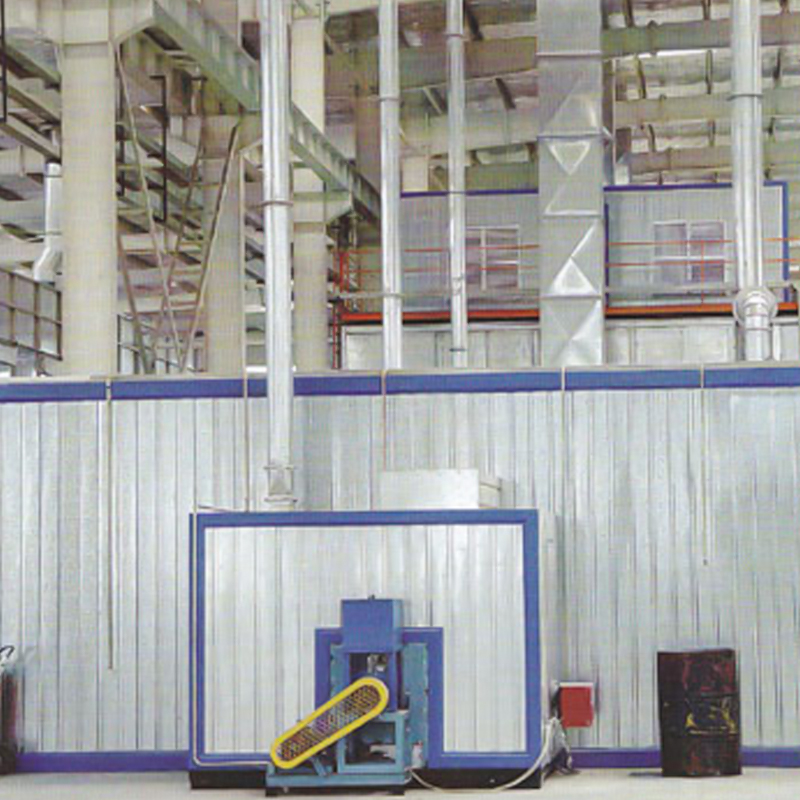
A curing oven system heats parts in a precisely controlled hot air environment at atmospheric pressure. The system uses uniform hot air circulation (typically fan-driven with multiple air return paths) combined with programmable temperature control to maintain temperature uniformity across the working volume — typically within ±1°C to ±5°C depending on the specification. Parts may be placed in the oven loose or with vacuum bags applied (free-standing vacuum bag cure), but without external pressure. Curing ovens can process epoxy resins, coatings, adhesives, composites, and a wide range of thermally activated materials. The modular design of modern curing oven systems allows process parameters to be programmed as multi-ramp, multi-soak temperature profiles — ensuring repeatable curing cycles across production batches.
| Parameter | Autoclave | Curing Oven System |
|---|---|---|
| Pressure | 3–10 bar above atmospheric | Atmospheric (vacuum bag only if required) |
| Temperature range | 60–400°C (typical) | 50–300°C (typical) |
| Temperature uniformity | ±2°C to ±5°C | ±1°C to ±5°C (programmable) |
| Void content (composites) | Below 0.5% | 1–3% (vacuum bag oven cure) |
| Capital cost | Very high (pressure vessel certification) | Significantly lower |
| Operating cost | High (gas consumption, certification) | Lower |
| Part size limitation | Limited by vessel diameter and length | Modular — scalable to very large |
| Cycle time | Longer (pressurization, depressurization) | Shorter |
A curing oven system is the practical and cost-effective choice across a wide range of industrial curing applications where elevated pressure is not required for quality achievement:
There are specific applications where the pressure of an autoclave is genuinely necessary and a curing oven is not an adequate substitute:
2026-07-17
Industry News
2026-07-10
Industry News
2026-07-03
Industry News
2026-06-26
Industry News
2026-06-19
Industry News
2026-06-12
Industry News
For exclusive deals and latest offers, sign up by entering your email address below